
Are We Missing Some Layers Beneath the Six Domains of Leadership?
Why I believe the Six Domains of Leadership need a stronger foundation

Most leadership models explain what a leader should do.
Very few explain what supports a leader underneath.
In my EMBA leadership class, we studied the Six Domains of Leadership. This framework is helpful and gives a simple way to understand different leadership behaviors.
Below is the basic model.
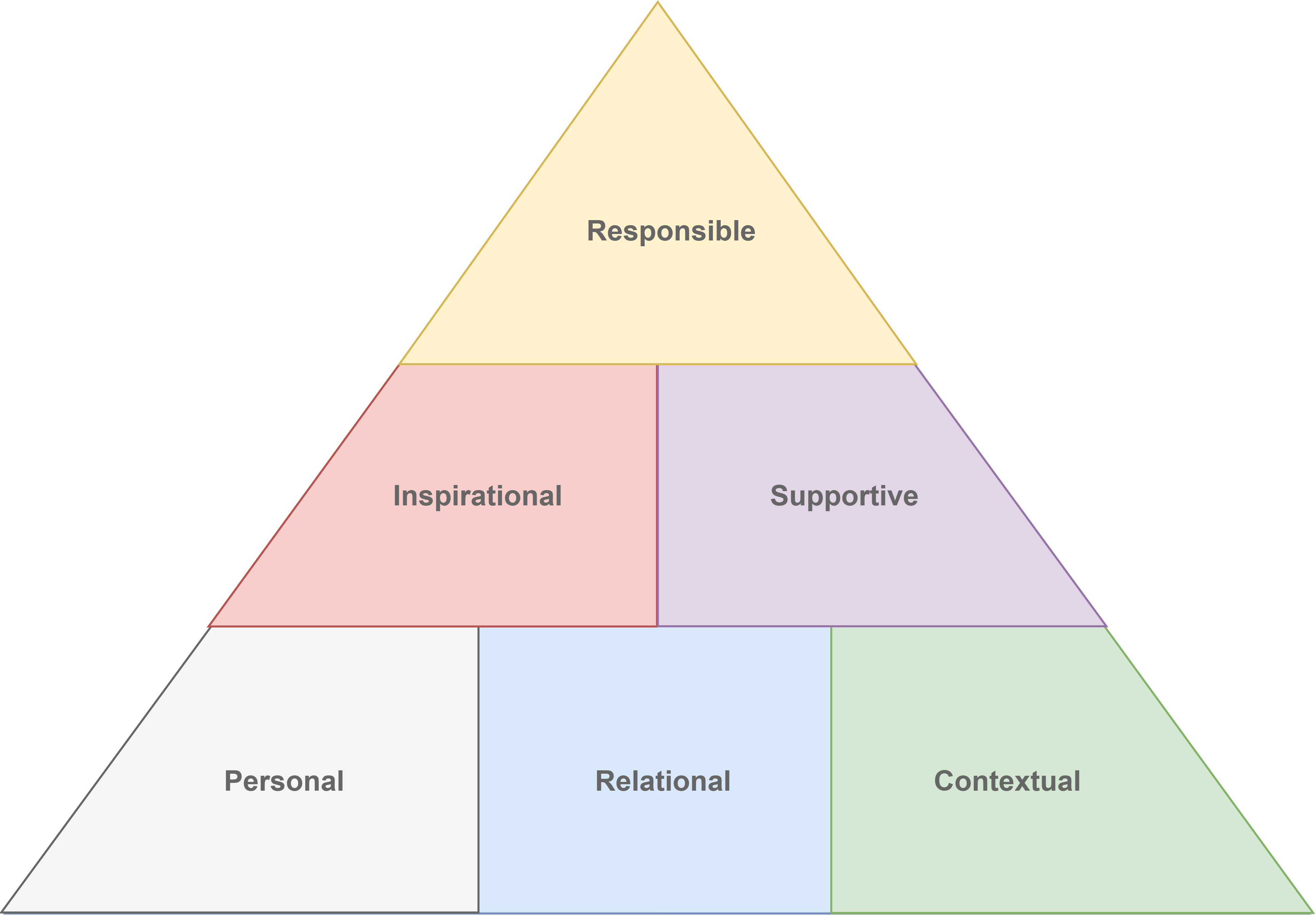
The Six Domains of Leadership
The six domains are:
Personal – knowing yourself and managing your own behavior
Relational – building trust and connection with people
Contextual – understanding the bigger environment
Inspirational – giving hope and direction
Supportive – helping others do their best work
Responsible – making good decisions and owning outcomes
This is a strong model. But when I applied it in real work, I started to feel that something was missing underneath the triangle.
It explains what leaders do, but not how they do it well every day.
So I added three layers under it — not to replace the model, but to strengthen it.
What Is Missing in the Six Domains?
Models are simple.
Real leadership is not.
In real life:
pressure changes people
emotions affect decisions
information does not travel smoothly
teams lose trust
leaders get reactive
creativity becomes limited
None of these problems are visible inside the original triangle.
But they affect leadership more than anything else.
So I added three layers that sit under the Six Domains.
These are not “extra skills.”
These are the foundation.
Below is my expanded diagram.
My Expanded Leadership Model
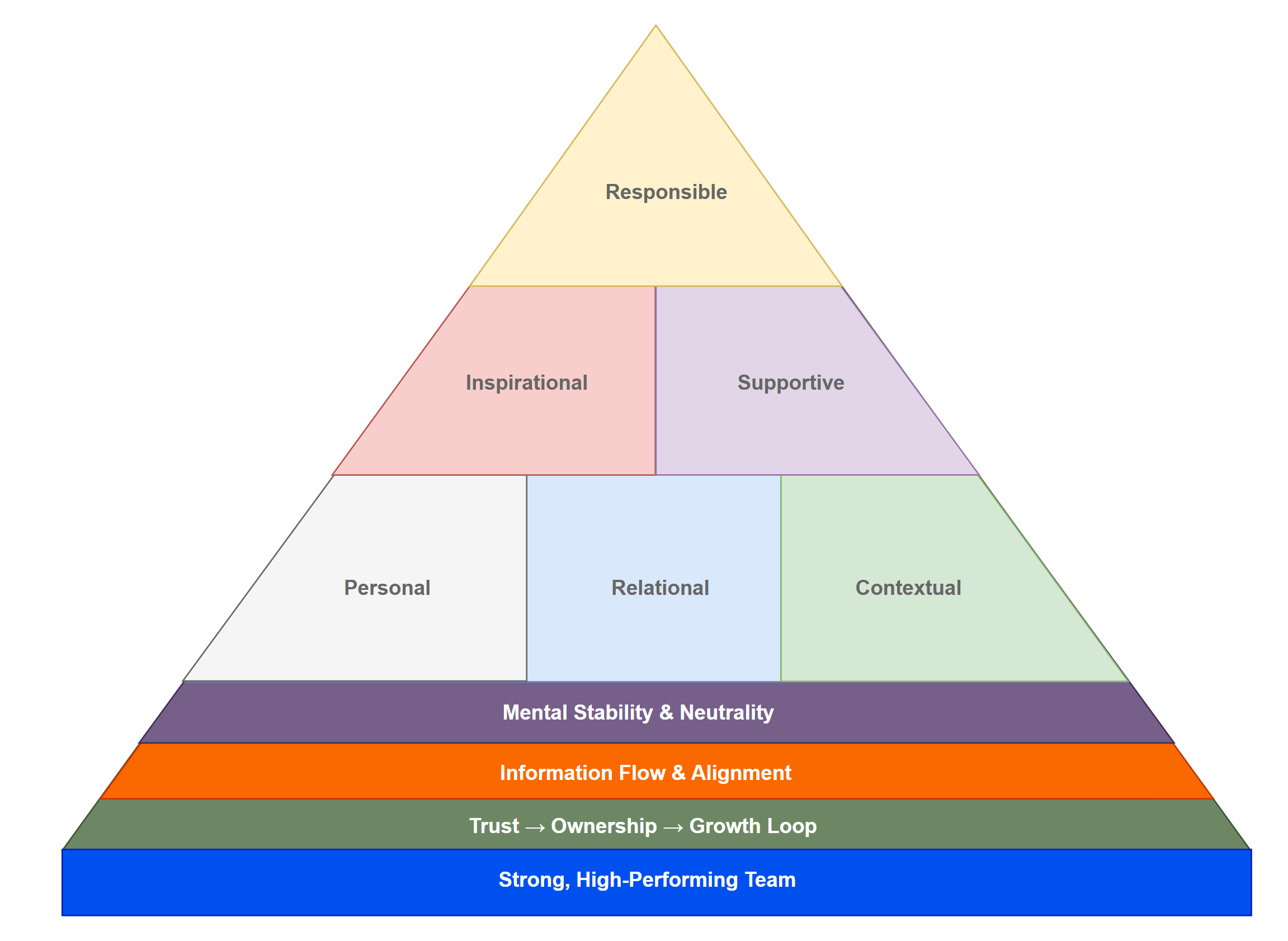
Layer 1: Mental Stability & Neutrality
A calm mind keeps the entire leadership system stable.
If a leader’s mind is not steady, the six domains become inconsistent.
Personal → becomes reactive
Relational → becomes emotional
Contextual → becomes narrow
Inspirational → becomes unpredictable
Supportive → becomes selective
Responsible → becomes stressful
A calm, clear mind helps a leader:
pause before reacting
avoid bias and stay neutral
see creative ideas
listen better
hold pressure without collapsing
Neutrality here does not mean “not caring.”
It means not letting emotions take over the decision-making process.
Without this layer, the rest of the triangle becomes shaky.
Layer 2: Information Flow & Alignment
Leadership fails when information does not move clearly.
Many leadership challenges come from poor communication:
different people hear different goals
information gets filtered
visibility becomes uneven
feedback gets stuck
assumptions multiply
This layer quietly supports all domains:
Personal → you know the true situation
Relational → trust grows with transparency
Contextual → you see the whole picture
Inspirational → everyone moves with one direction
Supportive → people know what they need
Responsible → you decide based on facts
Smooth information flow is like oxygen.
It is invisible, but without it leadership cannot survive.
Layer 3: The Trust → Ownership → Growth Loop
Teams perform when trust becomes the starting point.
Leadership works best when people feel trusted.
When trust is present:
people take ownership
they solve problems faster
they offer new ideas
they grow in confidence
This creates a loop:
Trust → Ownership → Growth → More Trust
This loop supports every part of the original model:
Personal → trusting yourself
Relational → trust between people
Contextual → trust in the mission
Inspirational → trust in the vision
Supportive → trust that mistakes are safe
Responsible → trust in fair decisions
When trust is missing, leaders start micromanaging.
Micromanagement is simply a sign of fear.
Why These Three Layers Matter
Because without them:
the Six Domains cannot stay stable
decisions become reactive
alignment breaks
innovation slows
trust collapses
people stop growing
The original triangle explains leadership actions.
These three layers explain leadership stability.
Both are needed for real leadership in real environments.
Why Cross-Functional Experience Strengthens These Layers
Many companies look for leaders with “15 years of experience in one domain.”
Domain knowledge is useful, but it can also create blind spots.
When leaders stay in one environment too long, they may:
solve problems the same way every time
rely on old assumptions
miss new patterns
optimize old systems instead of imagining new ones
become less open to creative ideas
Cross-functional experience gives leaders:
new ways to see problems
more comfort with ambiguity
better understanding of how teams think
more openness to new ideas
more stability under pressure
This experience naturally strengthens all three foundational layers:
Mental Stability → because they have handled different types of challenges
Information Flow → because they understand how functions connect
Trust Loop → because they rely less on control and more on collaboration
Cross-functional perspective is not a bonus.
It is a multiplier.
Final Thought
The Six Domains describe leadership.
But leadership also needs a foundation that stays stable when things get difficult.
For me, the foundation is:
Mental Stability & Neutrality
Information Flow & Alignment
Trust → Ownership → Growth Loop
These three layers support every leadership behavior on top of them.
This is the part of leadership that most people do not talk about, but it affects everything.