
Player or Spectator: A Different Way to Look at Life

The core idea isn’t entirely mine.
It comes from ancient Indian philosophy. I am only sharing it because it changed how I think about life, stress, and mental peace.
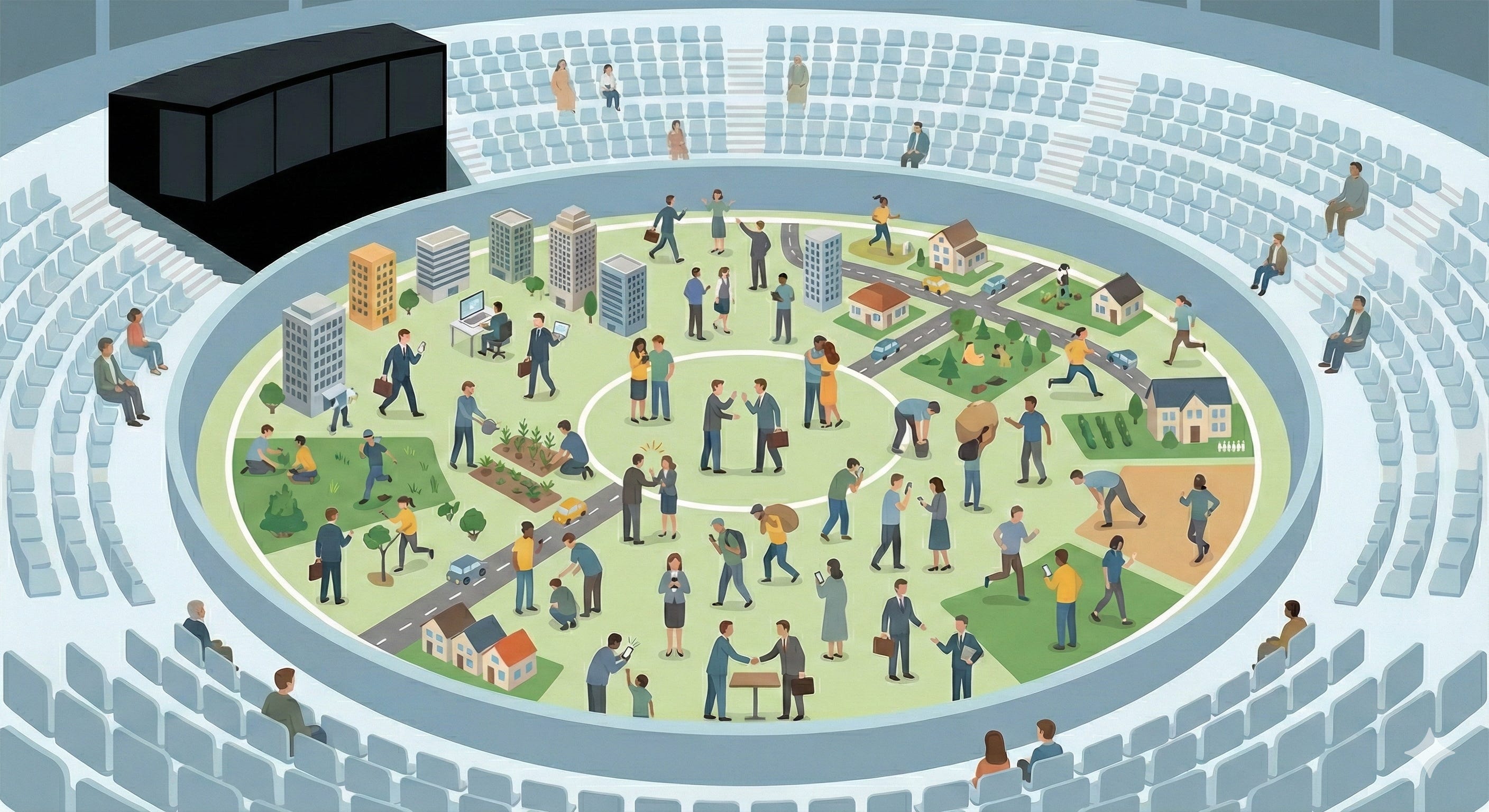
Imagine life as a game
Think of a game, like a reality show or something similar to Squid Game.
In this game, there are three roles:
Players
Controllers
Spectators
Most of us spend our entire lives as players.
The players
Players are deeply involved in the game.
They:
compare themselves with others
compete for status, money, attention, and approval
feel happy when they win
feel stressed, angry, or sad when they lose
Every emotion pulls them into the next event.
Some moments bring happiness.
But most moments bring mental noise and stress with them.
The game never really stops.
The controller
The controller runs the game.
In this view of life, the controller is God.
Some people may believe in this.
Some may not.
If you don’t want to call it God, you can think of it as
the force or power that ties everything together.
The important part is this:
we don’t see the controller
we don’t know how it works
we don’t know its rules
we don’t have access to its controls
We know almost nothing about the controller.
And that is the point.
The spectators
Spectators watch the game.
They are still part of life:
they work
they interact
they act when needed
But emotionally, they observe more than they react.
They may step into the game briefly,
but they return to spectator mode whenever they can.
They don’t attach their identity to wins or losses.
They carry very few expectations.
They watch life like a movie — present, but not trapped.
That is why they experience more peace.
Why most people suffer
We suffer because we stay deeply involved in the game.
As players, some days we win.
Some days we lose.
We believe that winning will bring lasting happiness.
But it never does.
When we lose, we compare ourselves with those who won.
We feel envy.
Sometimes anger.
Then we try again, hoping the next win will finally make us happy.
This cycle repeats.
Along the way:
we compare ourselves with others
we get attached to people, outcomes, and identities
we react emotionally to everything
we chase things we don’t actually need to survive
We move from one emotional event to another.
We chase permanent joy and happiness.
Instead, we enter a cycle of joy and sorrow — mostly sorrow.
Peace becomes rare.
How monks think about life
Monks are often used as an example, but you don’t need to be a monk.
They:
step back
observe thoughts and emotions
act when required, but without deep attachment
This idea is discussed in the Bhagavad Gita, where Krishna talks about action without attachment to results.
Can normal people practice this?
Yes — but it takes patience.
Humans are built to do the opposite.
Some small practices:
stop comparing with others
spend a few minutes alone each day, watching your thoughts
accept what you have today
remind yourself: “This is just part of the game”
With practice, the mind learns to step back.
Less player mode.
More spectator mode.
And with that, less misery.
Final thought
The world is getting faster.
So are our minds.
Distractions pull us in every direction,
making it harder to pause, reflect, and respond well.
Learning to step back —
to watch the game instead of being consumed by it —
helps us stay clear and steady.
Life does not become perfect.
But the mind becomes calmer.
And sometimes, that is enough.
Great advice Abhijit!